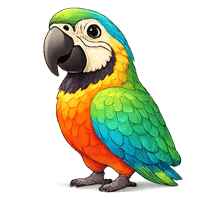
Parrot
Parrots have complex and varied nutritional needs, reflecting the wide range of foods they consume in the wild. Most parrot species eat a mixture of seeds, fruits, nuts, flowers, and plant material, and some also consume small amounts of insects. Because of this diversity, a healthy diet for a companion parrot should include a balanced combination of high-quality formulated pellets, fresh vegetables, fruits, and occasional seeds or nuts. Pellets are often recommended as a nutritional foundation because they are designed to provide essential vitamins, minerals, and amino acids that may be lacking in seed-only diets.
In many parrots, seed-heavy diets can lead to nutritional imbalances, particularly deficiencies in vitamin A, calcium, and other key nutrients. While seeds are appealing and energy-rich, they tend to be high in fat and should usually be offered as treats or small portions rather than the primary food source. Fresh vegetables such as leafy greens, carrots, and bell peppers are especially valuable because they provide vitamins and fiber that support immune function, feather health, and digestion.
Parrots are also highly intelligent and behaviorally driven eaters. In the wild they spend a large part of the day foraging, exploring, and manipulating food items. Providing a variety of foods, textures, and safe foraging opportunities helps keep parrots mentally stimulated and encourages natural feeding behaviors. Offering fresh foods regularly and rotating ingredients can prevent boredom while ensuring a more balanced intake of nutrients that supports long-term health.
-
Apple
TreatSmall seed-free apple pieces may be offered occasionally; avoid seeds.
-
Banana
TreatParrots can have small amounts of banana as part of varied fruit treats, not as a staple.
-
Beef
TreatSmall plain cooked beef may be offered occasionally, but it is not a staple food.
-
Blueberry
TreatCan be offered in small amounts as part of varied fruit treats.
-
Bread
TreatSmall amounts occasionally; avoid salty/seasoned breads.
-
Broccoli
TreatSmall plain broccoli pieces can be offered occasionally as part of a varied fresh-food rotation.
-
Carrot
TreatParrots can have small carrot pieces as part of a varied diet.
-
Celery
SafeCelery is safe for parrots and provides hydration and nutrients.
-
Cherry
AvoidDo not offer whole cherries; pits must be removed before any feeding.
-
Chicken
TreatSmall plain cooked chicken may be offered occasionally, but it is not a core diet item for parrots.
-
Chocolate
ToxicChocolate is toxic to parrots and can cause severe neurologic and cardiac signs.
-
Grape
AvoidAvoid grapes for parrots due to high sugar and unknown toxicity risk.
-
Lettuce
TreatLeafy lettuce may be offered in small amounts as part of varied vegetables.
-
Onion
AvoidOnion may irritate the digestive system and should be avoided.
-
Orange
TreatSmall pieces of peeled orange flesh can be offered occasionally as part of varied fresh foods.
-
Peanut butter
TreatVery small occasional amount only, plain and unsalted. Not a staple food for parrots.
-
Potato
TreatPlain cooked potato may be OK in small amounts for some parrots; avoid raw/green.
-
Raisin
AvoidAvoid raisins for parrots due to concentrated sugar and uncertain safety risk.
-
Spinach
SupplementLeafy spinach can be included in rotation in small portions as part of varied vegetables.
-
White rice
TreatSmall amounts of plain cooked rice may be offered occasionally as part of a varied diet.
-
Yogurt
TreatParrots are lactose-intolerant; if offered, plain unsweetened yogurt should be a very small occasional taste only.
-
Apple core
AvoidCore is not recommended; remove seeds and core before feeding apple.
-
Apple flesh
TreatCommon fruit treat in small portions; seed-free only.
-
Apple seeds
ToxicApple seeds are reported toxic to parrots and should never be fed.
-
Apple skin
TreatCan be offered in small amounts when washed well and seed-free.
-
Beef bones
AvoidDo not feed beef bones to parrots.
-
Cherry flesh
TreatPitted cherry flesh may be offered in small occasional portions.
-
Cherry pit
ToxicCherry pits are unsafe and should never be fed.
-
Chicken bones
AvoidDo not feed chicken bones to parrots.
-
Dark chocolate
ToxicHighly unsafe for parrots; dark chocolate has concentrated toxic compounds.
-
Milk chocolate
ToxicToxic to parrots and should never be fed.
-
White chocolate
AvoidNot recommended for parrots; chocolate products should not be offered.
-
Green leaf lettuce
TreatMay be offered occasionally as part of varied vegetables.
-
Iceberg lettuce
TreatCan be offered occasionally, but darker leafy greens are better choices.
-
Red leaf lettuce
TreatMay be offered occasionally as part of varied vegetables.
-
Romaine lettuce
TreatCan be offered occasionally as part of mixed vegetables.
-
Orange flesh
TreatSmall pieces of plain orange flesh can be offered occasionally as part of varied fresh foods.
-
Orange membrane
TreatA small amount may be eaten with the flesh, but plain soft fruit pieces are usually better.
-
Orange seeds
AvoidOrange seeds are best removed before feeding orange to parrots.
-
Orange skin
AvoidOrange peel is not the preferred part to feed and is best avoided.
-
Greek yogurt (plain)
TreatGreek yogurt may be slightly lower in lactose, but parrots should still get only tiny occasional amounts.
-
Plain yogurt (unsweetened)
TreatOnly tiny occasional amounts for parrots; plain and unsweetened only.